
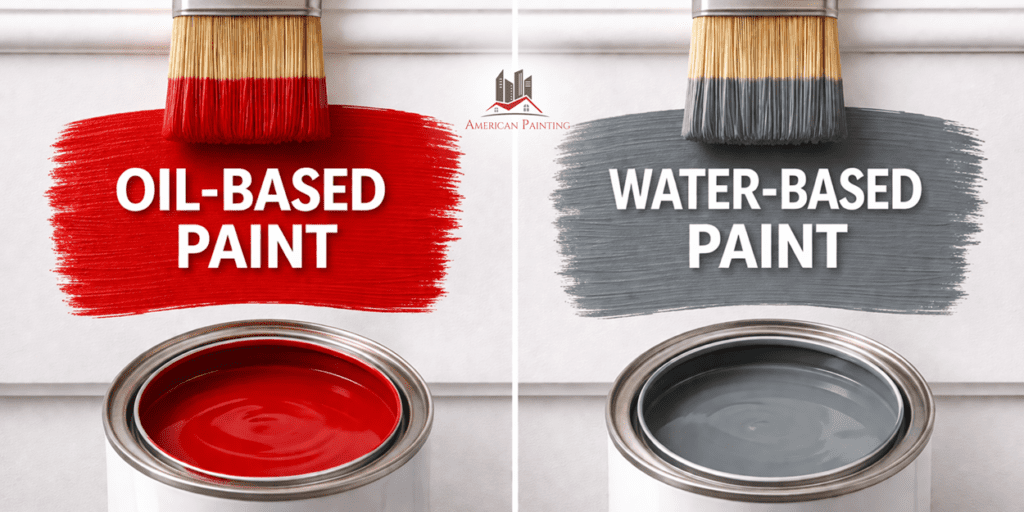
Oil based vs water based paint is a common question homeowners ask when choosing the right paint for their home. Choosing between these two paint types can be confusing, especially when you want to know which option will actually work best for your project.
For most modern residential painting projects, water-based paint is the preferred choice because it dries faster, has less odor, is easier to clean, and provides excellent durability. However, oil-based paint still has specific applications where it can be a good choice.
If you’re painting a home in San Diego, the right choice can also depend on the surface, existing paint, sunlight, moisture, and the type of project you’re completing.
In this guide, we’ll compare oil-based vs. water-based paint, explain the pros and cons of each, and share practical recommendations for interior and exterior house painting in San Diego.
Let’s get started!
Understanding the Basics: What Is Oil-Based vs. Water-Based Paint?
Before comparing performance, let’s simplify what these paints actually are.
Oil-Based Paint
Oil-based paint uses natural or synthetic oils as the binder. It cures through oxidation, meaning it hardens slowly as it reacts with air. Traditionally, it was the gold standard for durability and glossy finishes.
Common uses:
- Trim and doors
- Cabinets
- Metal surfaces
- High-traffic areas
Water-Based Paint
Water-based paint uses water as the carrier instead of oil solvents. Modern formulas have improved dramatically over the last decade and now dominate residential painting.
Types include:
- Water-Based Acrylic Paint
- Water-Based Latex Paint
- Water-Based Exterior Latex Paint
Today, most professional painters reach for water-based products first, and there’s a good reason why.
Oil-Based Paint vs. Water-Based Paint: The Core Differences
Let’s compare where each paint actually performs.
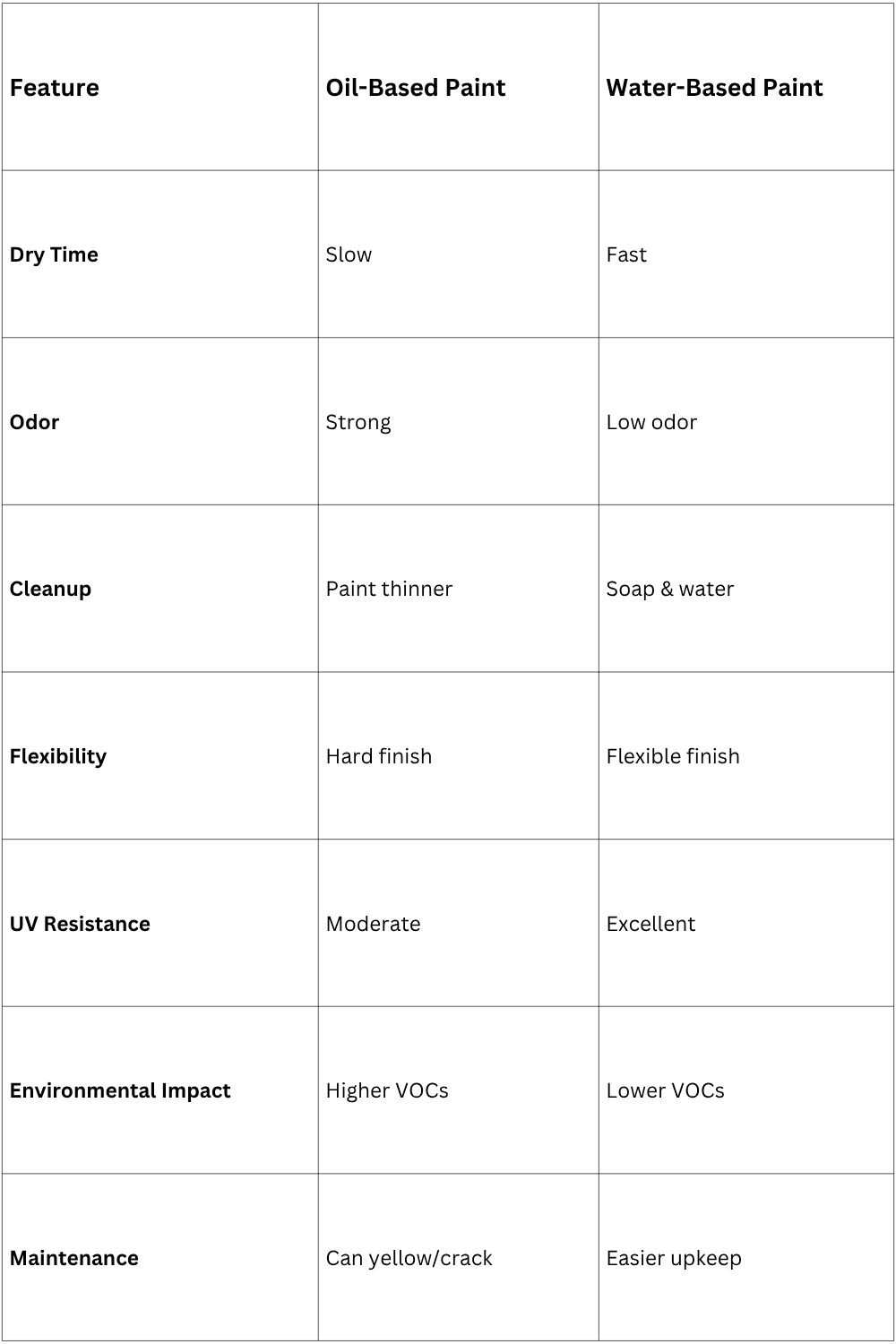
The biggest shift in the industry? Modern water-based acrylic paint now rivals oil paint in durability without the downsides.
Pros of Oil-Based Paint
- Extremely Smooth Finish: Oil paint levels beautifully as it dries, reducing brush marks. It is best for cabinet refreshing, furniture restoration, and detailed trim work.
- Hard Protective Surface: Once cured, oil paint forms a tough shell resistant to dents and scratches.
- Strong Adhesion on Properly Prepared Surfaces: Oil-based paint can work well on certain previously painted surfaces, but the existing coating needs to be properly evaluated and prepared. Some surfaces may still require sanding or an appropriate primer before repainting.
Cons of Oil-Based Paint
Here’s where many homeowners regret their choice.
- Long drying time (sometimes 24+ hours)
- Strong fumes require ventilation
- Difficult cleanup
- Higher environmental restrictions
- Yellowing over time, especially indoors
Many professionals now limit oil paint to specialty situations rather than whole-house projects.
Why Water-Based Paint Has Become the Preferred Choice for Most Homes?
Paint technology has improved significantly over the years. Modern water-based acrylic and latex coatings offer excellent durability, adhesion, color retention, and washability.
For most residential projects, water-based paint is now a practical choice because it offers faster drying, lower odor, easier cleanup, and good flexibility.
Faster Project Completion
You can often apply multiple coats in a shorter period compared with traditional oil-based paint. For Interior House Painting in San Diego, this can mean:
- Less disruption
- Faster room turnaround
- Lower labor costs
Flexible Finish for Changing Conditions
Exterior building materials naturally expand and contract as temperatures and moisture levels change. Modern water-based exterior coatings are generally designed to remain more flexible than traditional hard-drying oil coatings.
This flexibility is one reason water-based coatings are commonly used for modern exterior house painting projects.
Better Color Retention
Quality water-based exterior paints are formulated to provide good resistance to fading and weathering. This can be particularly useful for homes exposed to strong sunlight and changing outdoor conditions.
Easier Application and Cleanup
Water-based paints are generally easier to apply and clean up than traditional oil-based paints. Most water-based products can be cleaned with soap and water, although homeowners should always follow the manufacturer’s instructions.
Which Paint To Use for Interior Projects?
When planning interior house painting in San Diego, climate and lifestyle matter.
Water-Based Paint Wins For:
- Living rooms
- Bedrooms
- Kitchens
- Walls and ceilings
- Modern trim systems
The reasons behind are simple. Water-based paints have low odor, are quick drying, and are easier to maintain. Oil paint is now mostly reserved for:
- Antique woodwork
- Specialty cabinetry
- Certain high-gloss decorative finishes
Exterior House Painting: Which Paint Lasts Longer?
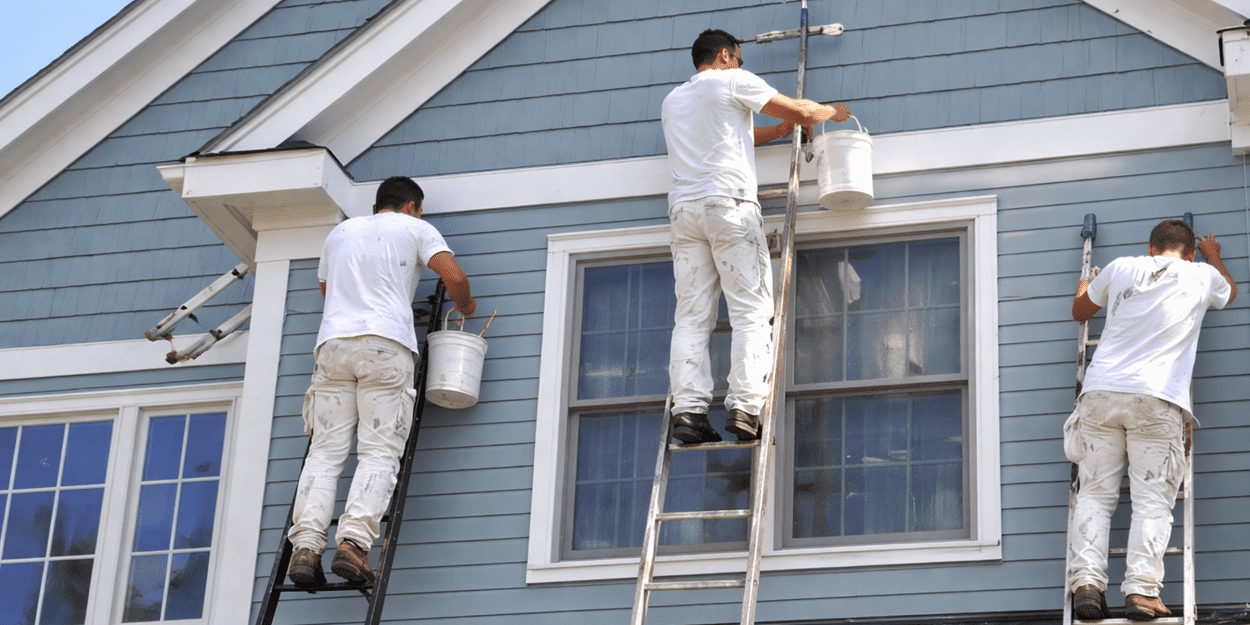
For exterior house painting in San Diego, durability isn’t just about toughness; it’s about adaptability. Exterior surfaces face:
- UV exposure
- Moisture shifts
- Temperature swings
- Coastal salt air
Oil paint hardens but becomes brittle. Over time, it can crack and peel.
Water-based exterior coatings:
- Expand and contract with siding
- Resist mildew better
- Hold color longer
- Allow moisture vapor to escape
Professional painters overwhelmingly prefer water-based systems for modern exteriors.
Water-Based Acrylic Paint vs. Water-Based Latex Paint
Many homeowners use the terms acrylic and latex interchangeably, but paint formulas can differ depending on the resin, additives, quality, and intended application.
Water-Based Acrylic Paint
Acrylic-based coatings are commonly chosen when durability, adhesion, weather resistance, and long-term performance are important.
They can be a good option for:
- Exterior walls and siding
- High-use interior surfaces
- Trim and doors, depending on the product
- Areas exposed to greater wear
- Projects where long-term performance is important
Water-Based Latex Paint
Latex is commonly used to describe water-based architectural coatings designed for residential applications. Many latex paints are formulated for easy application, good coverage, and everyday interior use.
They are commonly suitable for:
- Walls
- Ceilings
- Bedrooms
- Living rooms
- Lower-wear interior areas
Which One Should You Choose?
Don’t choose paint simply because the label says “acrylic” or “latex.” The specific product, surface, sheen, location, and expected wear all matter.
For exterior house painting in San Diego, choosing a quality exterior coating that is suitable for the specific surface and exposure conditions is more important than simply choosing a product because it says acrylic or latex.
Expert Recommendations: When to Choose Each Paint?
Choose Oil-Based Paint When:
- Painting cabinets requiring ultra-smooth gloss
- Restoring older wood surfaces
- Coating metal railings or specialty finishes
Choose Water-Based Paint When:
- Painting walls or ceilings
- Updating interiors
- Painting exteriors
- Working in occupied homes
- Speed and convenience matter
Most experienced painters today use a hybrid strategy, oil only where necessary, water-based everywhere else.
Common Mistakes Homeowners Make While Choosing House Paint
Choosing the right paint involves more than picking a color or deciding between oil and water-based products. These are some of the most common mistakes homeowners make:
- Ignoring the Surface: Different surfaces such as stucco, wood, drywall, metal, and cabinets can require different preparation and paint products.
- Painting Over Existing Problems: Peeling, cracking, mildew, loose paint, or damaged surfaces should be repaired before applying new paint.
- Ignoring the Existing Paint: If you’re switching from oil-based paint to water-based paint, proper preparation and the right primer may be necessary depending on the existing coating and surface condition.
- Choosing Paint Only by Price: The cheapest paint isn’t always the best value. Coverage, durability, preparation, and the number of coats required can affect the overall result.
- Ignoring San Diego’s Climate: Sunlight, temperature changes, coastal moisture, and salt air can affect exterior paint depending on where your home is located.
- Choosing Paint Before Considering Surface Preparation: Even high-quality paint can fail when applied over a poorly prepared surface. Cleaning, scraping, sanding, repairs, and priming can make a major difference in the life of a paint job.
The Verdict: Oil-Based Paint vs. Water-Based Paint
For most modern residential painting projects, water-based paint is the better overall choice. It offers faster drying, easier cleanup, lower odor, good durability, and flexibility for many interior and exterior applications.
Oil-based paint still makes sense for certain specialty projects where a hard, smooth finish or specific coating characteristics are desired.
For San Diego homeowners, the right choice should also take into account the surface, existing paint, sunlight, moisture exposure, and condition of the home.
Choose Water-Based Paint When:
- Painting most interior walls and ceilings
- Painting modern residential exteriors
- Low odor and quick drying are important
- Easy cleanup is preferred
- A flexible modern coating is appropriate
Consider Oil-Based Paint When:
- A specialty application calls for it
- Restoring certain older surfaces
- A hard, smooth finish is desired
- The product manufacturer recommends it for the application
The key isn’t simply choosing oil or water-based paint. It’s choosing the right coating for the surface and preparing that surface correctly.
Final Thoughts: Making the Right Choice for Your Home
Choosing between oil-based Paint or water-based paint isn’t about tradition; it’s about performance, lifestyle, and long-term results. for most homes:
- Water-based paints offer easier application
- Better durability in changing climates
- Faster project completion
- Healthier indoor environments
Whether you’re planning a refresh inside your home or preparing for exterior house painting in San Diego, selecting the right paint and the right professional makes all the difference.
If you’re unsure which paint system fits your project, consult an experienced local painter who evaluates surfaces, exposure, and goals before recommending products.
Because a great paint job isn’t just about color. It’s about choosing smarter materials from the start.
Need help choosing the right paint for your San Diego home? Contact our team to discuss your project and request a painting estimate.
Frequently Asked Questions About Oil-Based vs. Water-Based Paint
1. Is water-based paint better than oil-based paint?
For most modern residential painting projects, water-based paint is the preferred choice. It dries faster, has less odor, is easier to clean, and provides excellent durability. Oil-based paint can still be useful for certain specialty applications where a hard, smooth finish is desired.
2. Can you paint water-based paint over oil-based paint?
Yes, but proper surface preparation is important. The existing oil-based paint should be cleaned and properly prepared, and sanding and a suitable bonding primer may be necessary before applying water-based paint. Always follow the paint manufacturer’s recommendations.
3. Which paint is more durable: oil-based or water-based?
Oil-based paint can provide a very hard and durable finish, but modern water-based paints have improved significantly. For many residential applications, high-quality water-based paint provides excellent durability while offering faster drying and easier cleanup.
4. Can you use water-based paint over old oil-based paint?
Yes, but you should not apply it directly without checking and preparing the existing surface. Depending on the condition and finish of the old oil-based paint, sanding and a suitable primer may be needed to improve adhesion and prevent peeling.
5. Which paint is best for exterior house painting in San Diego?
For most modern residential exteriors, a high-quality water-based exterior coating is a common choice. However, the best paint depends on the surface, existing coating, sunlight, moisture exposure, and condition of the home. A professional painting contractor can recommend the appropriate coating system for your property.