
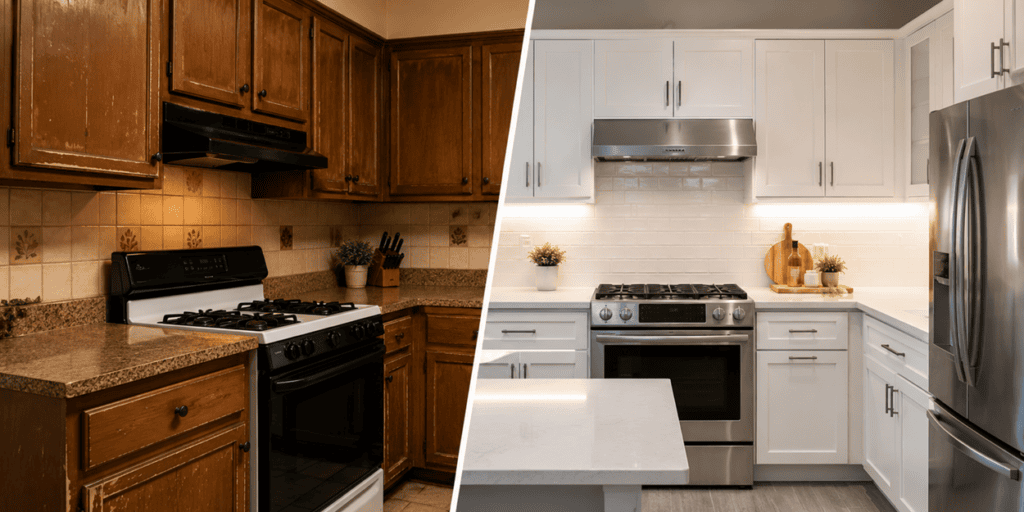
When you want to give your kitchen a completely new look without draining your bank account, you usually end up staring at two main choices: kitchen cabinet refinishing vs. replacing.
It’s a classic battle between keeping your existing layout and totally rebuilding from scratch. Let’s look at the real numbers, the actual work involved, and how to figure out which choice makes the most sense for your wallet, your home, and your sanity.
Is Kitchen Cabinet Refinishing Cheaper Than Replacing?
Refinishing your existing cabinets is almost always significantly cheaper than buying brand-new ones. On average, a professional structural replacement can easily run you tens of thousands of dollars. New boxes, new doors, hardware, delivery fees, and heavy labor add up fast. If you decide to change the layout of your room, you’ll also have to pay for moving plumbing lines, gas pipes, and electrical outlets.
Opting for kitchen cabinet refinishing usually cuts your expenses by a massive margin. You aren’t paying for raw lumber, manufacturing, or heavy demolition. Instead, you are paying for the skill, precision, prep work, and high-quality coatings needed to make your current structures look brand new. For most homeowners, this route saves thousands of dollars that can be reallocated to new appliances, updated countertops, or simply kept safely in the bank.
What is Kitchen Cabinet Refinishing and How Does it Work?
Kitchen cabinet refinishing is a meticulous, structural renewal process. It means taking your existing cabinet doors and drawer fronts, removing their old, worn-out clear coats or paint layers, fixing minor surface dings, and applying an industrial-grade finish that looks like it just rolled out of a high-end factory showroom.
The beauty of this method is that your kitchen remains fully intact. Your countertops stay right where they are. Your sink doesn’t move. Your plumbing hasn’t been touched. You bypass the weeks of living in a dusty construction zone with no way to cook a meal. It is a targeted, high-impact aesthetic upgrade that respects your budget.
How to Refinish Kitchen Cabinets: The Real Process
If you’ve ever wondered how professionals achieve that flawless look, here is the exact, step-by-step reality of how to refinish kitchen cabinets properly:
- Removal of Hardware: Every single door, drawer front, hinge, and handle must be carefully removed and labeled. You cannot skip this step and paint them while they hang; it always looks messy.
- Deep Chemical Cleaning: Kitchens are full of airborne grease, cooking oils, and fingerprint smudges. Every square inch of the wood must be scrubbed down with powerful degreasers to ensure the new coating bonds perfectly.
- Sanding and Stripping: The original factory clear coat or old paint must be thoroughly broken down. Sanding creates a smooth, receptive surface and removes grain imperfections.
- Flawless Priming: A specialized stain-blocking primer is applied. This prevents old wood tannins from bleeding through your beautiful new light-colored finish over time.
- Fine Spray Application: Rather than using standard paint brushes or rollers, professionals use airless or HVLP spray equipment in a controlled environment to lay down multiple ultra-thin, smooth layers of industrial-grade coatings.
When is it Best to Refinish Your Cabinets Instead of Replacing Them?
Here is when you should absolutely choose to refinish rather than replace:
- Your Cabinet Boxes Are Strong: If your current cabinets are made of solid, heavy plywood or high-grade real wood rather than cheap, crumbling particle board, keep them! Older cabinets are often built much better than standard modern budget options.
- You Love Your Current Kitchen Layout: If your stove, sink, and refrigerator are already in the perfect spots, there is no logical reason to tear down the walls just to put new boxes back in the exact same positions.
- You Want Premium Results Fast: A complete kitchen tear-out can leave you without a usable cooking space for weeks or even months. A professional refinishing team can often transform your entire space in less than a single week.
When Do You Have No Choice But to Replace Your Cabinets?
As much as we love saving money, there are times when refinishing simply won’t cut it. You will have to bite the bullet and replace your cabinets if you experience any of the following deal-breakers:
- Structural Water Damage or Mold: If a hidden pipe leak has caused the wood to swell, bow, rot, or grow mold, the integrity of the cabinet box is completely gone. No amount of paint or sanding can fix structurally compromised wood.
- Cheap Particle Board Collapse: If your cabinets are made from low-grade, flimsy particle board that is already sagging, cracking, or breaking apart at the hinges, they aren’t worth saving.
- You Hate Your Functional Layout: If your kitchen feels tiny, awkward, or cuts off your walking paths, refinishing the doors won’t solve your problem. To fix a fundamentally broken room layout, you need a complete redesign.
Why Should You Hire Professional Kitchen Cabinet Refinishing Contractors?
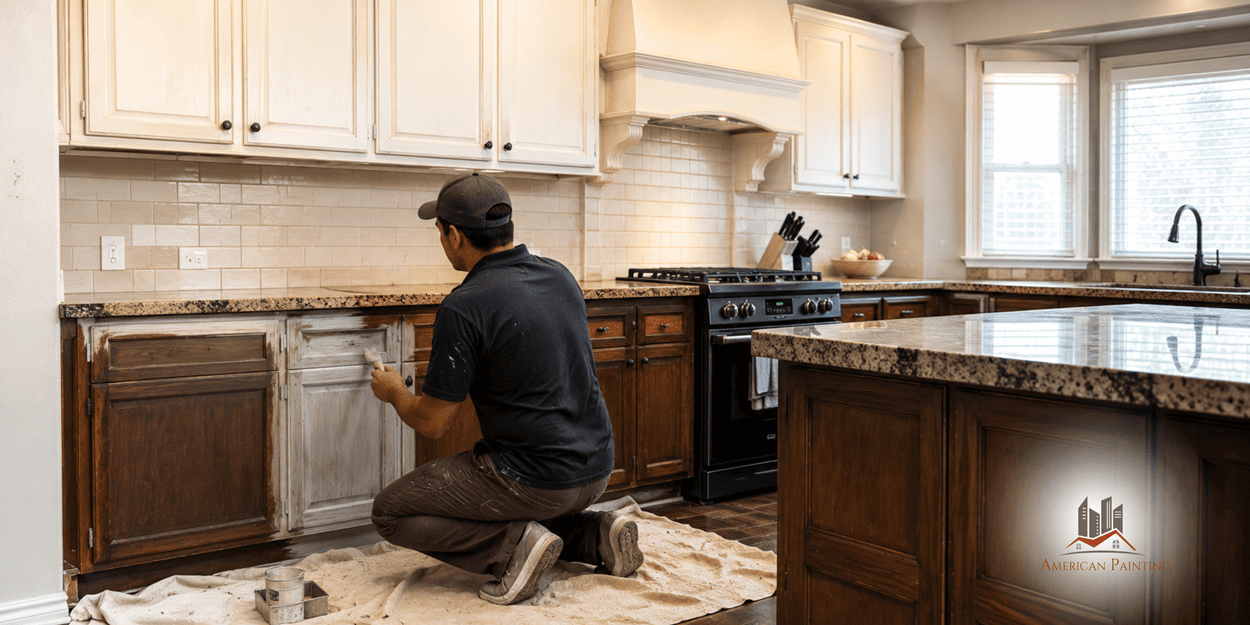
It can be incredibly tempting to view this as a quick weekend DIY project. You see a few online videos and think you can handle it yourself. However, the reality of a DIY attempt often ends in visible brush marks, peeling paint within six months, and a kitchen that looks worse than when you started.
True durability requires professional tools, dust-free spray booths, and commercial-grade chemical coatings that aren’t sold to the general public. Turning to expert kitchen cabinet refinishing contractors ensures that your kitchen gets an incredibly hard, durable finish that can withstand daily knocks, moisture, and frequent cleanings without chipping away.
Bottom Line
To sum it up plainly: if your current kitchen cabinet boxes are structurally sound, sturdy, and you are perfectly content with where your appliances are located, refinishing is the absolute champion for your wallet. It delivers a breathtaking, dramatic visual transformation that looks identical to a brand-new kitchen installation, all while saving you thousands of hard-earned dollars.
So, don’t spend a fortune on a stressful, messy demolition when your dream kitchen is already standing right in front of you. At American Painting, our dedicated, experienced professional team specializes in turning tired, outdated wood into beautiful, modern masterpieces with flawless, factory-grade finishes. Let us help you save money while elevating your home’s value. Get in touch with us today for a free, no-obligation consultation and find out how simple your kitchen transformation can truly be!
FAQ
Q1. Is refinishing kitchen cabinets a good idea?
Yes, if your cabinet boxes are structurally sound, sturdy, and you like your current kitchen layout. It provides a dramatic visual transformation that looks identical to a brand-new installation while saving you thousands of dollars compared to a full replacement.
Q2. Is cabinet refinishing the same as painting?
No, painting often just places a layer of paint over the existing surface. True refinishing is a meticulous, multi-step structural renewal process. It requires completely removing old coatings, deep chemical cleaning to strip grease, detailed sanding, applying stain-blocking primers, and spraying industrial-grade finishes for a flawless, factory-smooth look.
Q3. How long does refinishing cabinets take?
A professional refinishing team can usually transform your entire kitchen in less than a single week. This completely bypasses the weeks or months of dusty construction and displaced living associated with a full cabinet tear-out.
Q4. Does refinishing cabinets increase home value?
Yes, because the kitchen is the heart of the home, outdated cabinets can drag down your property’s appeal. Refinishing gives the space a modern, premium look and elevates your home’s overall value without the massive upfront financial drain of buying new materials.
Q5. Is it difficult to refinish cabinets?
Yes, achieving a durable finish requires specialized tools, professional dust-free spray booths, and commercial-grade chemical coatings. DIY attempts often lead to visible brush marks, peeling paint within six months, and poor bonding due to trapped kitchen grease.