
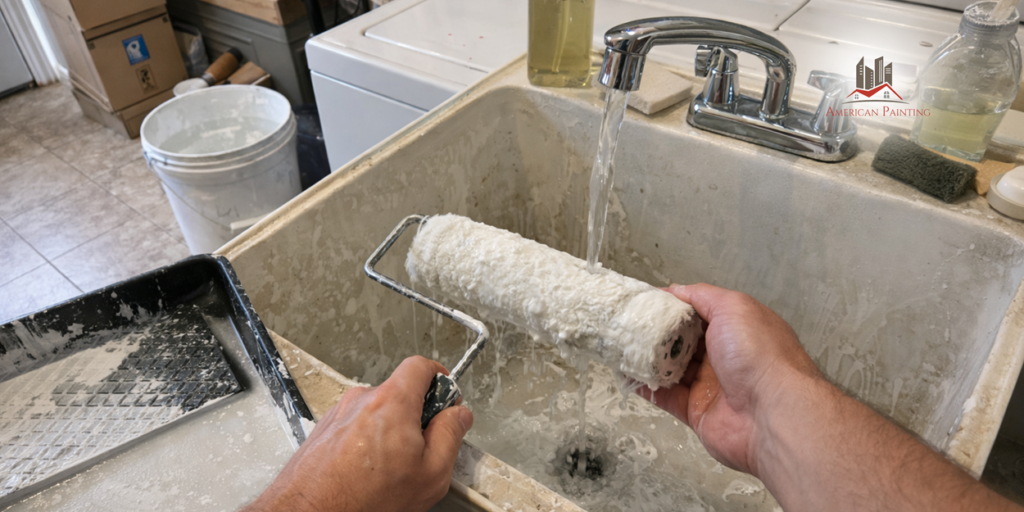
If you’ve ever finished painting and stared at a soggy paint roller with paint dripping off it, you’ve probably asked yourself: Should I clean this or just throw it away?
Well, you’re not alone. A properly cleaned roller can last multiple projects and give smoother finishes. A poorly cleaned one, on the other hand, will ruin your next coat in seconds.
This guide walks you through the professional way, the same approach used in real house painting at San Diego job sites, without shortcuts. Keep on reading!
Step-by-Step Guide to Cleaning Your Paint Roller
Step 1: Remove Excess Paint First
The biggest mistake people make is taking a paint roller with paint still dripping from it straight to the sink. You are just asking for a clogged drain and a massive mess.
- Scrape it Down: Use a 5-in-1 tool or the curved edge of a putty knife. Run it down the length of the roller over the paint tray to squeeze out the excess. You’ll be surprised how much usable paint is still trapped in the fibers.
- The Roll-Out: Find a scrap piece of cardboard or a heavy-duty paper bag. Roll the tool until it stops leaving significant marks. The less paint you take to the water, the faster the job goes.
Step 2: The Cleaning Process (Water-Based Paints)
If you’re using standard latex or acrylic, warm water is your best friend.
- Slide it Off: Remove the roller sleeve from the frame. If you leave it on, the paint dries inside the tension springs, and the roller will eventually stop spinning smoothly.
- Submerge and Massage: Fill a bucket with warm water and a few drops of dish soap. Submerge the sleeve and use your hands to work the paint out of the core.
- Use a Paint Roller Cleaner: For those who paint frequently, a spinning paint roller cleaner tool is a game-changer. These mechanical spinners use force to whip the water and paint out of the fur in seconds. It’s the only way to get the deep fibers truly clean.
Step 3: Cleaning Oil-Based Paints
If you’ve been using oil-based stains, water won’t help. You’ll need mineral spirits or paint thinner.
- Fill a small container with the solvent.
- Agitate the roller in the solvent until the paint thins out.
- Repeat with a second clean wash of solvent. Make sure to never pour these solvents down the drain. Store them in a sealed jar until the paint solids settle, then reuse the clear liquid.
Step 4: Drying
How do I clean a paint roller so it doesn’t get crusty? The answer is in the drying. Never lay a wet roller flat on its side. The fibers will mat down and dry in a flat bald spot, making your next coat of paint look streaky.
Is a Used Paint Roller Even Worth Saving?
If the paint has already started to harden in the fibers, just toss it. A poorly cleaned roller will leave dried flakes on your freshly painted walls, ruining a professional finish. However, if you follow the steps mentioned above immediately after the job, that roller will be ready for the next paint job.
Final Thoughts
Knowing how to clean a paint roller properly saves money, improves finish quality, and avoids frustrating repainting later. The difference between DIY-looking walls and professional results often comes down to tool care and not just technique.
If you’d rather skip the cleanup, prep work, and risk of uneven coats, professional exterior painters handle all of this automatically, and your walls show it.
FAQs
What is the best way to clean a paint roller after painting?
The best way is to first remove excess paint by scraping and rolling it out, then wash the roller with warm water and mild soap for latex paint or mineral spirits for oil-based paint. At American Painting, professionals emphasize immediate cleaning to prevent paint from drying inside the fibers and ruining the roller. Get free estimate now at +1 858 255 4565!
Is it worth cleaning a paint roller or should I replace it?
Yes, cleaning a paint roller is worth it if done immediately after use. A properly cleaned roller can be reused multiple times without affecting finish quality. American Painting recommends replacing rollers only if paint has hardened, as dried fibers can cause streaks and uneven application.
How do you clean a paint roller with dried or hardened paint?
If paint has dried inside the roller, it is usually not salvageable. Soaking in warm water or solvent may loosen some residue, but the roller will not perform properly. For professional results, it’s better to replace hardened rollers rather than risk ruining your next coat.
Can I clean a paint roller without removing it from the frame?
You can, but it’s not recommended. Leaving the roller on the frame traps paint inside the core and can damage the spinning mechanism. Removing the sleeve allows for thorough cleaning, better drying, and longer tool life, especially for repeated painting projects.
What is the best method to clean oil-based paint from a roller?
Use mineral spirits or paint thinner instead of water. Submerge the roller, agitate to loosen paint, and repeat with clean solvent until fully removed. Proper disposal is important, never pour solvents down the drain. This method ensures deep cleaning of oil-based coatings.
How do you dry a paint roller properly after cleaning?
After rinsing, shake or spin out excess water and stand the roller upright or hang it to dry. Avoid laying it flat, as this flattens fibers and causes uneven paint application later. Proper drying helps maintain the roller’s shape and ensures a smooth finish next time.
Should I hire a professional painter instead of cleaning tools myself?
Hiring a professional saves time, ensures proper preparation, and delivers a flawless finish. Professionals handle cleaning, maintenance, and application using advanced tools. For larger or high-visibility projects, expert painters provide better durability and eliminate the risk of streaks or uneven coats.