
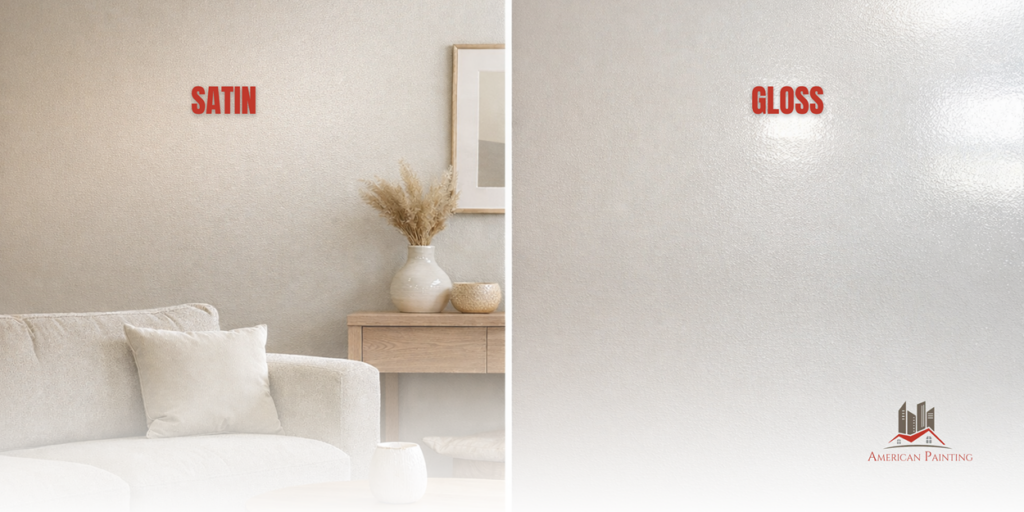
Choosing a paint color for your home is only half the battle. Selecting the right sheen determines how that color behaves, how long it lasts, and how much work it takes to keep it clean. In the professional world, the debate often comes down to satin vs gloss. While both offer a step up in durability from flat or eggshell paints, they serve vastly different functional and aesthetic purposes.
What is the Difference Between the Botm Visually: Satin vs Gloss
The most immediate difference is how these finishes handle light.
- Satin Finish: Known for its velvety, glow-like appearance, it is much more subdued. It reflects enough light to give a room dimension without creating harsh glares. Because it scatters light rather than reflecting it directly, it is significantly better at hiding minor dings, patches, or orange peel textures on your walls.
- Gloss Finish: This is the high-performance, high-shine option. It creates a crisp, almost glass-like surface that reflects light aggressively. This makes colors appear more vibrant and saturated. But it comes with a warning. Gloss will highlight every single brush mark, roller ridge, or uneven patch on the substrate.
Durability and Maintenance: Which is the Better Option?
If you are painting a high-traffic area, durability is non-negotiable.
- Scrubbability: Gloss is a much better choice in this scenario. Because the finish is slick and hard, dirt and grease sit on top of the surface rather than soaking in. This makes it ideal for areas prone to fingerprints, like doors and window casings.
- Moisture Resistance: Gloss finishes act as a better barrier against humidity and steam. In small bathrooms with poor ventilation, a glossier finish can help prevent mildew from taking hold as easily as a matte or satin finish might.
Professional Recommendations: Room-by-Room
- Trim, Doors, and Cabinets: Stick with Gloss. These surfaces are touched constantly and take the most abuse. The high shine also creates a beautiful architectural contrast against flatter walls.
- Kitchen and Bathroom Walls: Use satin because it provides the necessary moisture resistance without making your walls look like an institutional hallway.
- Hallways and Entryways: Satin is the way to go. It handles the rough and tough of daily life while keeping the lighting soft and welcoming.
- Ceilings and Master Bedrooms: It is best to avoid both. These areas usually benefit from the flat look that hides imperfections and creates a cozy atmosphere.
Wrapping Up
The choice between two isn’t just about what looks pretty. It’s about how much prep work you’re willing to do and how often you plan on cleaning. Gloss requires a perfectly sanded, flawless surface to look good, while satin is far more forgiving for the average DIYer or older home.
Not sure which sheen will handle the San Diego sun or your family’s daily wear and tear? At American Painting, we specialize in matching the right high-end products to your home’s unique needs. From flawless cabinet refinishing to protective exterior coatings, we ensure your finish is as durable as it is beautiful.
FAQ
Is satin paint too shiny for walls?
No, it is the standard for kitchens and bathrooms because it offers a soft glow. However, it will highlight wall bumps more than a flat finish. Make sure to prepare your walls well.
Is satin or gloss better for a modern look?
Modern design favors low luster and velvety finishes. Gloss is typically seen as more traditional, though it works well as a high contrast accent on modern cabinets.
Does satinwood stay white longer than gloss?
Yes, traditional oil-based gloss yellows quickly in low light. Water-based satinwood retains its true white much longer without turning old.
Should I use gloss or satinwood?
Use gloss for a mirror-like shine and easy cleanability. You can use satinwood for a contemporary look on baseboards and interior doors.
Is satin too shiny for a living room?
The choice is pretty subjective, but yes, in a living room, satin can look plastic under bright light.